2002–2012, and after
The foundation was a house, a website, and a refusal to be silent.
Mary Leitao named an illness for her son, built the Morgellons Research Foundation, helped force a federal look, and then closed the door. The domain kept a frozen homepage for years. This page is the story, not a shrine.
1674
A name sitting in an old letter
Sir Thomas Browne wrote of “Morgellons” in Languedoc: children with harsh hairs on their backs. Mary Leitao later borrowed the word. Nobody has shown that the 17th-century description and the modern illness are the same thing. The name stuck because a mother needed one.
2001–2002
A two-year-old, a toy microscope, a website
Mary Leitao, a former lab technician, said her son Drew developed sores and that she saw colored fibers under a microscope. Doctors offered scabies, then nothing that satisfied her. In 2002 she put a name on the illness and opened what became the Morgellons Research Foundation. Emails arrived by the thousand.
2004
A formal nonprofit, then a family blow
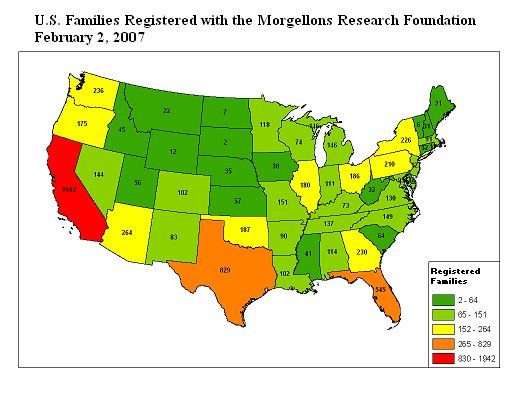
MRF incorporated as a 501(c)(3). Edward Leitao, an internist and Mary’s husband, died that July. The foundation kept going from a house in Pennsylvania. Later the site would say registrations had come from all fifty U.S. states and dozens of other countries.
2006–2008
Congress, CDC, a public briefing
Advocacy reached Washington. Oklahoma State University clinicians reported seeing fibers under unbroken skin. On January 16, 2008, CDC and Kaiser Permanente Northern California announced a formal investigation. CDC’s working description listed crawling, biting and stinging; granules, threads or black specks; lesions; and, for some people, fatigue, confusion, memory loss, joint pain, and vision changes.
2012
A paper, a closing, a number frozen in place
Pearson and colleagues published in PLOS ONE. They did not find a shared infection with the tools they used. The foundation dissolved that February, directed remaining funds to the Oklahoma State University Foundation, and stopped taking registrations. The old homepage still showed 14,720 registered families. That figure was self-report. The patient registry has no documented public home.
2012–2024
Two literatures, barely speaking
Dermatology and psychiatry largely folded Morgellons into delusional infestation. A smaller laboratory group — Middelveen, Stricker, Fesler, Wymore and others — kept publishing on human keratin/collagen filaments and Borrelia. Patients lived in the gap between those rooms.
2025
No trials, still an argument
A dermatology review found no randomized treatment trials and asked for shared diagnostic criteria first. At ILADS, an OSU doctoral student presented sequencing work under Randy Wymore. In December, patients and clinicians asked HHS to reopen a federal look at the file.
2026
More paper, still no settlement
Cleveland Clinic restated the brain–skin signaling view. A bioRxiv preprint reported a microbial signature in a tiny family cohort. Middelveen, Fesler and Stricker published a twenty-year review arguing the fibers are cellular, not cloth. The question is louder. It is not closed.
From the original site
What the foundation actually put on the internet.
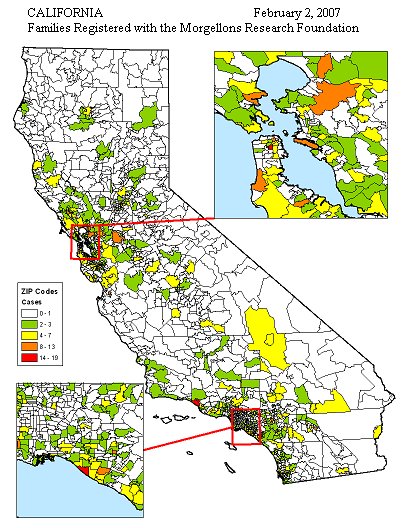
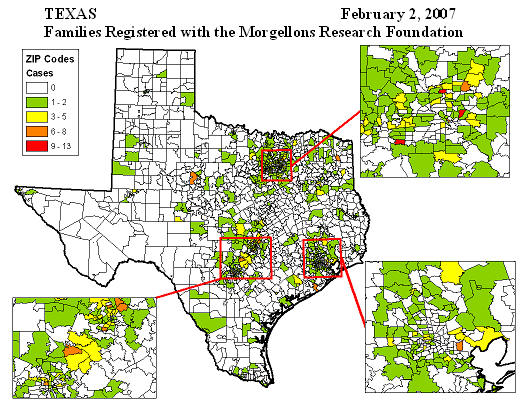
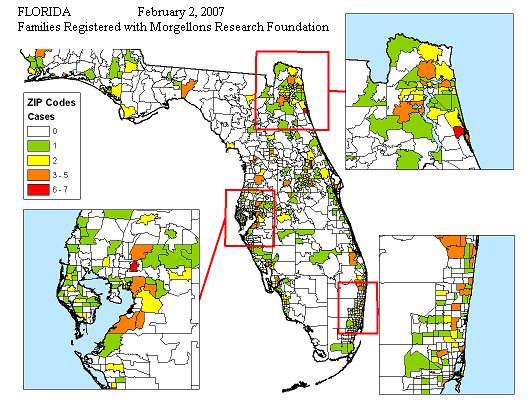
These files are from the old public uploads, 2004–2007. They are documents, not decoration. The ZIP also held coupon ads, later screenshots, and a large lesion gallery. Those stayed in the box.




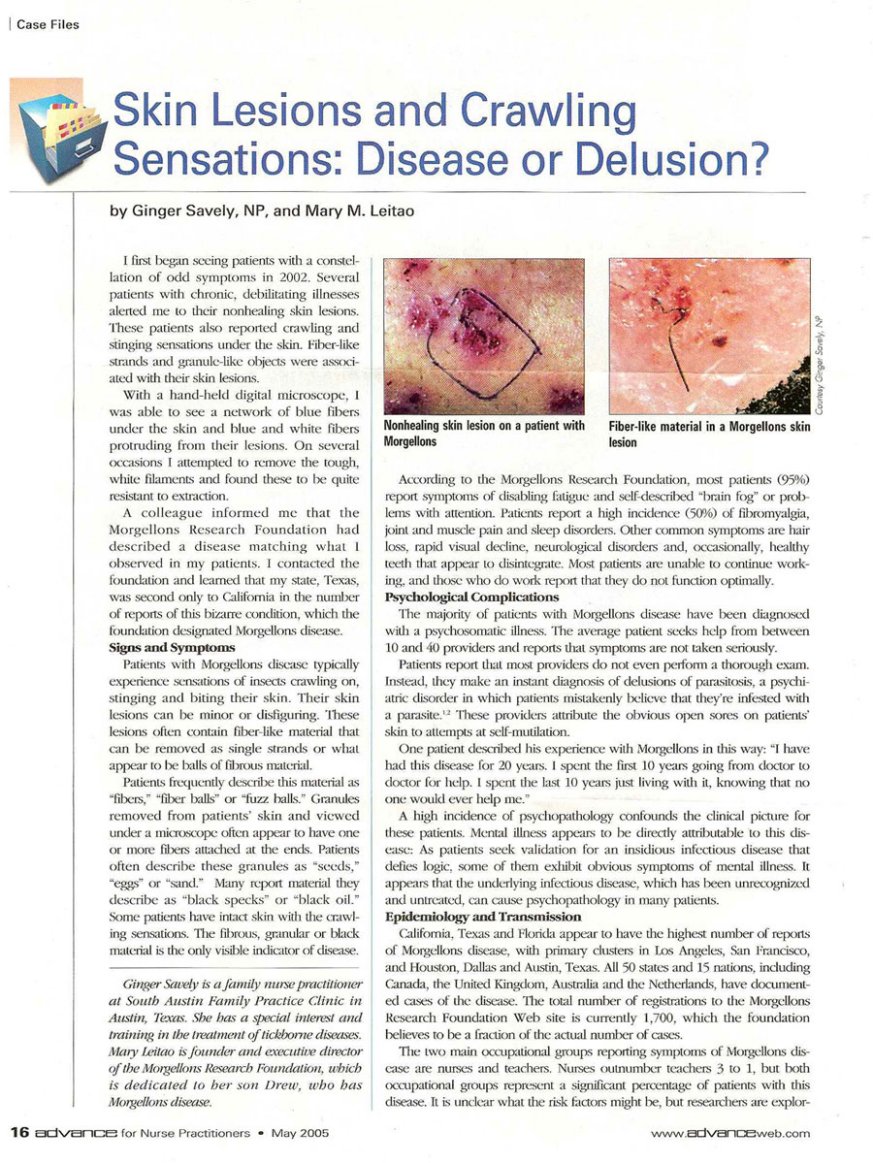
What the old about-page said
“The Morgellons Research Foundation (MRF) is a 501(c)3 non-profit organization established in 2002 in honor of a two-year-old child with an unknown illness, which his mother labeled ‘Morgellons disease’.”
They said they were raising awareness and research money for an illness that could disfigure and disable, including children. They supported the CDC–Kaiser investigation and promised seed money to private scientists. By the frozen homepage: 14,720 registered families.
In February 2012 the organization said it was no longer active, not taking registrations or donations. Remaining funds went to the Oklahoma State University Foundation. Randy Wymore’s group is still in that lineage. This website is not.